
Introduction: Nostalgia as a Gateway, Not a Destination
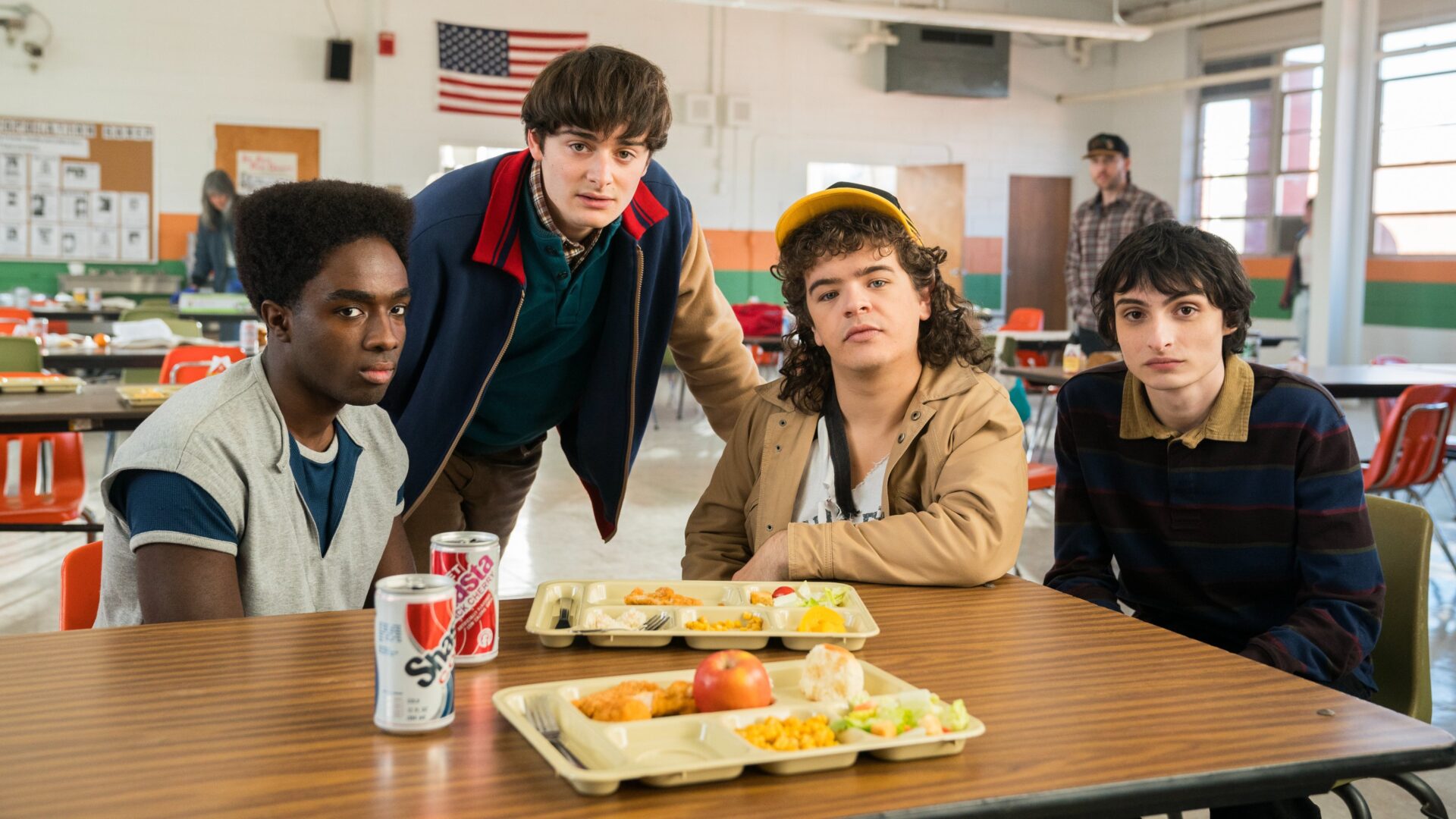
When Stranger Things premiered on Netflix in 2016, it was immediately labeled a nostalgic tribute to the 1980s. Audiences recognized the bikes, the arcades, the synth music, and the familiar suburban calm hiding unspeakable danger. Yet to dismiss the series as merely an exercise in nostalgia is to miss its deeper achievement. Stranger Things did not simply recreate the past; it translated the visual, thematic, and emotional grammar of 1980s popular culture into a contemporary storytelling language. By doing so, it connected multiple generations, reshaped how nostalgia functions in modern media, and demonstrated that aesthetic memory can be a powerful narrative tool rather than a decorative gimmick.
The 1980s as a Narrative Vocabulary
The 1980s occupy a unique place in popular imagination. It was a decade defined by Cold War anxiety, rapid technological change, suburban expansion, and a flourishing of genre entertainment aimed at younger audiences. Films by Steven Spielberg, John Carpenter, and Robert Zemeckis, along with novels by Stephen King, created a shared cultural vocabulary built around wonder, fear, and adolescence. Stranger Things draws directly from this vocabulary, but instead of copying it wholesale, the series treats it as a language with rules that can be bent, combined, and updated.
The Duffer Brothers understood that audiences do not merely remember the 1980s through facts, but through feelings. The decade is recalled as a time of freedom and vulnerability, when children roamed neighborhoods unsupervised and imagination blurred with danger. Stranger Things captures this emotional truth and uses it as a foundation for its storytelling. The 1980s setting becomes a shorthand that instantly communicates tone, stakes, and worldview, allowing the series to focus on character and mystery rather than constant exposition.
Visual Aesthetics as Emotional Signifiers
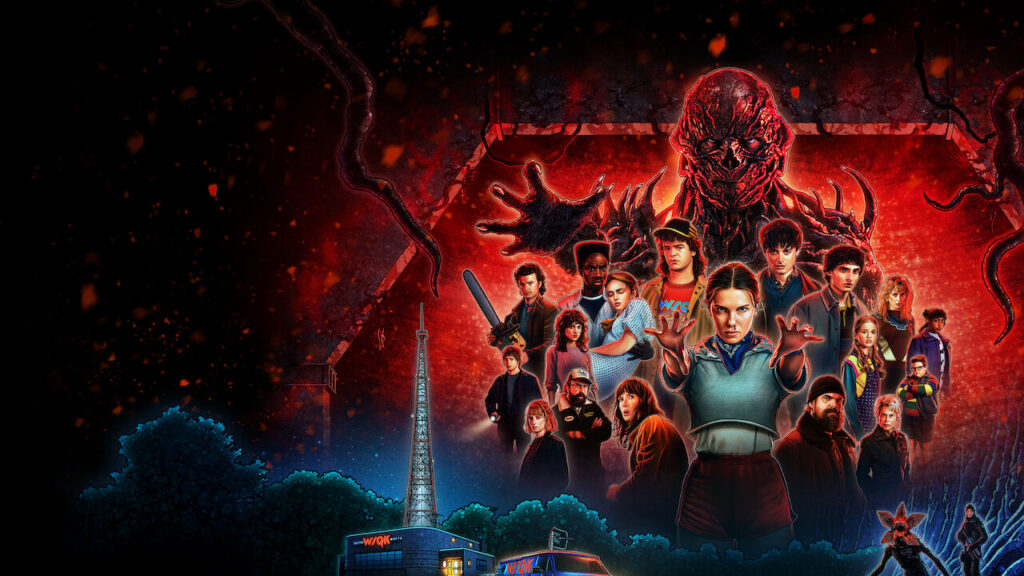
One of the most striking elements of Stranger Things is its visual design. The show’s color palette, lighting, and production design are carefully calibrated to evoke the era without feeling like a museum display. Warm yellows and browns dominate domestic spaces, suggesting comfort and nostalgia, while cold blues and reds characterize the supernatural realm and government laboratories. This contrast visually reinforces the central conflict between safety and threat, innocence and corruption.
The series also borrows cinematic techniques associated with 1980s filmmaking, such as slow zooms, symmetrical framing, and lingering shots that build suspense rather than relying on rapid cuts. These choices encourage viewers to engage emotionally with scenes, mirroring the pacing of older films while still feeling deliberate and modern. By blending analog textures with high-definition clarity, Stranger Things transforms the look of the 1980s into a living, breathing aesthetic that feels relevant rather than dated.
Music and Sound as Narrative Memory
The soundtrack of Stranger Things plays a crucial role in its storytelling language. Synth-driven themes recall the work of composers like John Carpenter and Vangelis, instantly situating viewers in a retro soundscape. However, the music is not simply atmospheric; it actively shapes emotional response and narrative rhythm. The pulsing synths often act as a heartbeat for the story, intensifying moments of suspense or wonder.
In addition to its original score, the series carefully selects popular songs from the era, using them to anchor scenes in emotional reality. These tracks are not chosen solely for recognition but for resonance. When familiar music plays during moments of fear, loss, or triumph, it bridges the gap between past and present, reminding viewers that the emotions portrayed are timeless. In this way, sound becomes a form of narrative memory, reinforcing the idea that the past is not static but emotionally alive.
Childhood, Friendship, and the Myth of the Lost World
At the heart of Stranger Things is a story about childhood and friendship. The series embraces the 1980s tradition of centering young protagonists, but it deepens this approach by acknowledging the fragility and impermanence of childhood. The early seasons portray childhood as a space of imagination and loyalty, where friendship offers protection against a hostile world. Yet as the series progresses, it confronts the inevitability of change, loss, and maturation.
This thematic arc reflects a modern understanding of nostalgia as bittersweet rather than purely celebratory. The show does not suggest that the past was perfect, but that it was meaningful. By framing childhood as a temporary refuge rather than a permanent ideal, Stranger Things resonates with contemporary audiences who recognize that longing for the past often stems from a desire for emotional clarity rather than historical accuracy.

Horror as a Reflection of Social Anxiety
While Stranger Things borrows monsters and supernatural concepts from 1980s horror, it reinterprets them through a modern lens. The threats in the series are not merely external creatures but manifestations of deeper fears. Government experiments, secrecy, and surveillance echo Cold War paranoia, while the Upside Down represents the unseen consequences of unchecked authority and scientific hubris.
This approach allows the show to use familiar horror imagery while addressing contemporary concerns. The monsters are frightening not only because of their appearance, but because of what they symbolize. By grounding supernatural horror in emotional and social realities, Stranger Things transforms genre tropes into tools for exploring trauma, grief, and moral responsibility. The 1980s aesthetic provides the framework, but the storytelling speaks directly to modern anxieties.
Characters as Bridges Between Eras
The characters of Stranger Things play a vital role in translating 1980s aesthetics into a modern language. They are recognizable archetypes—the nerd, the sheriff, the outcast, the popular girl—but they are written with emotional complexity that reflects contemporary storytelling standards. Characters are allowed to be flawed, vulnerable, and contradictory, challenging the simpler moral binaries often found in older genre narratives.
This depth ensures that the series does not rely solely on nostalgia for engagement. Viewers invest in the characters not because they resemble familiar types, but because they feel authentic. The emotional arcs of characters like Eleven, Hopper, and Max explore themes of identity, loss, and belonging that transcend era. Through them, the series demonstrates that nostalgia can coexist with progressive storytelling rather than opposing it.
The Globalization of 1980s Nostalgia
Another key factor in Stranger Things’ success is its ability to globalize a distinctly American vision of the 1980s. While the series is deeply rooted in American suburban culture, its themes and emotions are universal. Friendship, fear, curiosity, and resilience are experiences shared across cultures, allowing international audiences to connect with a setting that may not be their own.
Streaming platforms have amplified this effect, transforming Stranger Things into a global phenomenon. For many viewers, the show introduced 1980s aesthetics for the first time, not as lived experience but as a stylized narrative language. This global reception highlights how nostalgia can function not just as remembrance, but as discovery, enabling audiences to engage with the past in new and meaningful ways.
Nostalgia as Innovation Rather Than Imitation
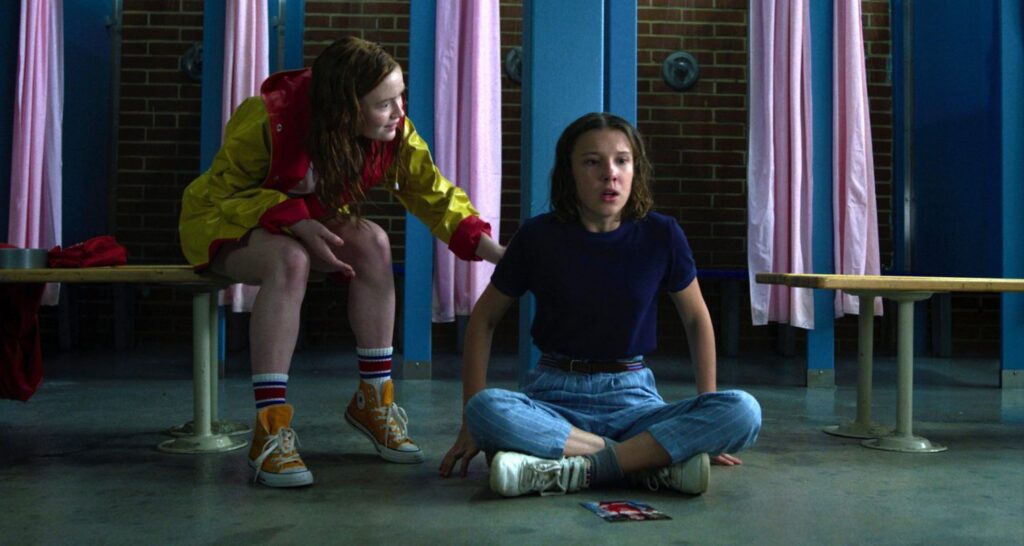
What ultimately sets Stranger Things apart is its understanding of nostalgia as a creative force rather than a constraint. The series does not attempt to recreate the 1980s exactly as they were, nor does it rely on constant references to signal its influences. Instead, it absorbs the essence of the era and reinterprets it through modern storytelling techniques, themes, and emotional depth.
This approach has influenced a broader trend in contemporary media, encouraging creators to treat past aesthetics as adaptable languages rather than fixed templates. Stranger Things demonstrates that looking backward does not have to mean moving backward. When used thoughtfully, nostalgia can provide a foundation for innovation, allowing stories to feel both familiar and fresh.
Conclusion: A Living Dialogue Between Past and Present
Stranger Things succeeded because it understood that nostalgia alone is fleeting, but emotional truth is enduring. By transforming 1980s aesthetics into a modern storytelling language, the series created a dialogue between past and present, memory and imagination. It invited viewers to revisit a familiar world not to escape the present, but to better understand it.
In doing so, Stranger Things redefined what nostalgic storytelling can achieve. It proved that the past does not need to be preserved behind glass, but can be reanimated, reexamined, and reimagined. More than a tribute to a bygone decade, the series stands as a testament to the power of storytelling to bridge generations, turning collective memory into a living, evolving narrative that continues to resonate long after the credits roll.
About the Author
