

The Slayer Arrives: A New Kind of Teenage Hero
When Buffy the Vampire Slayer premiered in 1997 on The WB, few could have predicted its lasting cultural significance or the way it would redefine the teen hero archetype. Created by Joss Whedon, the show started as an underdog—a quirky series about a high school girl battling vampires and demons while navigating adolescent struggles. Yet, over the course of seven seasons and more than 140 episodes, Buffy not only built a devoted fanbase but also carved out a new model for youth-centered storytelling. It challenged gender norms, broke genre boundaries, and ultimately gave birth to a new kind of protagonist: the empowered teen hero, who could wield both sarcasm and a stake with equal flair.

Fighting Monsters, Inside and Out
The world of Buffy the Vampire Slayer was as much about internal demons as it was about literal ones. Set in the fictional town of Sunnydale, which happened to sit on a mystical convergence point known as the Hellmouth, the show used supernatural metaphors to tackle the turmoil of adolescence. Buffy Summers, played with a perfect balance of vulnerability and grit by Sarah Michelle Gellar, wasn’t your typical superhero. She wanted to go to prom, hang out with friends, and maybe survive math class. But she also bore the weighty responsibility of being the Slayer—the Chosen One—destined to fight evil and, in many ways, to grow up faster than anyone should.
Rewriting the Female Protagonist
Before Buffy, teenage heroes in popular media were often relegated to sidekick status or defined by simplistic stereotypes. They were the nerd, the jock, the cheerleader, or the rebel, rarely all at once. Buffy flipped this formula on its head. She was the cheerleader with super strength, the girly girl who could kill demons, the troubled teen who carried a cosmic burden. She was, above all, a contradiction—and it was in that contradiction that she became revolutionary. Buffy didn’t shed her femininity to be strong; she embraced it and still kicked ass. This blending of the ordinary and extraordinary helped make her relatable and aspirational, a nuanced figure for a generation of viewers trying to reconcile their own complexities. Her story and branding strategy have even inspired modern creatives and those running a branding agency to think differently about identity and image.
Strength in Vulnerability
The show’s impact on the depiction of female protagonists cannot be overstated. At a time when most action heroes were still male and stoic, Buffy’s emotional openness and inner conflicts made her all the more powerful. She cried. She doubted. She failed. And yet, she kept going. Her strength wasn’t about being invulnerable; it was about resilience in the face of overwhelming odds. This allowed for a reimagining of what heroism could look like, particularly for young women. Buffy didn’t just save the world—she saved it while shouldering homework, heartbreak, and social pressure. Her influence even extends beyond TV, inspiring self-care practices and wellness experiences, from meditation to tantric massage in Las Vegas. She was, as Willow famously said, “a superhero with a bad attitude.”
Turning Teen Drama into Mythology
Buffy also redefined the very structure of teen drama. It wasn’t just about who was dating whom or who would win Homecoming. In Buffy, those storylines were often juxtaposed against apocalyptic threats, turning everyday struggles into matters of literal life and death. A breakup wasn’t just emotional—it unleashed a demon. A bad teacher might be an actual predator in disguise. Puberty wasn’t just awkward—it turned you into a monster. This allegorical approach allowed the show to delve into taboo or complicated subjects with creative freedom and emotional resonance. Sexuality, grief, addiction, mental illness—all were explored through metaphor in ways that bypassed censorship while hitting harder than many straightforward depictions could. Even in unrelated contexts, discussions about guidance—whether from mentors, legal advisors, or a boutique law firm in Kelowna—can illuminate complex challenges in unexpected ways.
The Power of Found Family
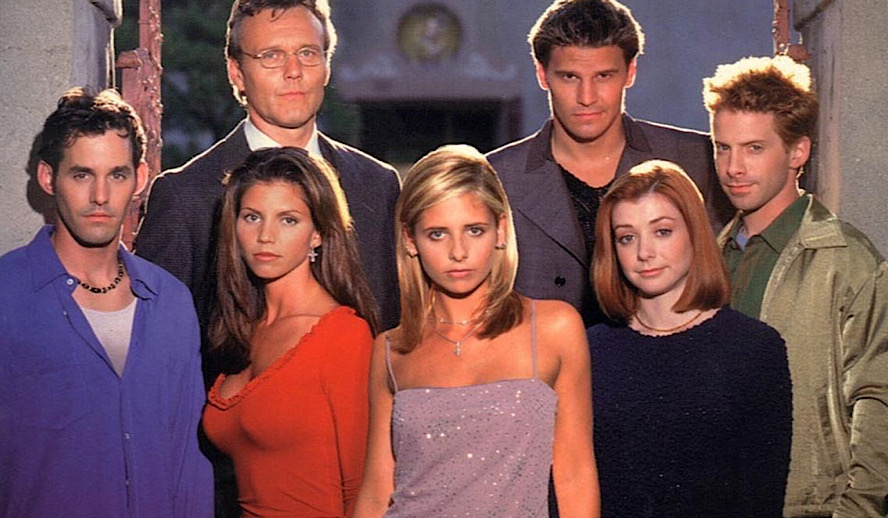
Integral to this structure was Buffy’s support system, affectionately known as the “Scooby Gang.” Characters like Willow Rosenberg, Xander Harris, Rupert Giles, and later additions like Anya, Tara, and Spike, all added depth and dimension to the world. They were more than sidekicks; they were essential parts of Buffy’s journey, each with their own arcs and transformations. This ensemble format emphasized that heroism wasn’t a solo endeavor. Even the Chosen One needed a team. It was a radical departure from the lone wolf trope that dominated superhero narratives and offered a more communal, emotionally intelligent model of strength.
A Genre-Bending Masterclass
Another aspect of Buffy’s genius lay in its genre-blending. It was horror, comedy, action, romance, and teen soap all rolled into one. The show was known for its tonal agility—moving from a heart-wrenching death to a witty one-liner in the space of a scene. This mixture allowed it to explore a wide emotional range while keeping the audience engaged. Episodes like “Hush,” in which the characters lose their voices and the horror becomes visual and eerie, or “The Body,” which tackles death with brutal realism and no musical score, showcased just how far Buffy could stretch the limits of what television could do. These episodes weren’t just innovative—they were emotionally devastating and artistically daring. For fans who appreciate uniqueness in all forms, even something like finding a Cavachon puppy for sale can feel like discovering a rare gem.
Growing Up with the Characters
Perhaps one of the most significant contributions of Buffy the Vampire Slayer was its ability to evolve along with its characters. As Buffy and her friends left high school and entered adulthood, the themes of the show matured. The monsters became subtler, the moral questions murkier. Issues like the cost of sacrifice, the weight of destiny, and the nature of identity became more central. Buffy’s struggle wasn’t just about saving others; it was also about saving herself, finding meaning in her role, and forging her own path. Even in moments of normal life, like going out for eyebrow threading in Plano, TX, the characters’ growth and personal care were subtly highlighted. The show dared to ask what happens after you save the world—again and again—and whether the savior ever gets a break.
One Girl in All the World—No More
The final season encapsulated this evolution in its most powerful moment. In a radical act of selflessness and feminism, Buffy decides to share her power. Rather than continue the line of solitary Slayers, she activates every potential Slayer in the world, making them all Chosen. It was a staggering shift in narrative logic and thematic weight. No longer was power confined to one person, and no longer was heroism a burden carried alone. This act symbolized the ultimate message of the show: that empowerment is not a zero-sum game. The series ended not with Buffy alone, but with a world full of Buffys. It was a fitting conclusion for a show that spent seven seasons teaching us that anyone, no matter how young or how ordinary, could be extraordinary.
A Lasting Legacy in Pop Culture
The ripple effects of Buffy’s empowered teen hero can still be felt today. From Veronica Mars to The Hunger Games, from Stranger Things to Ms. Marvel, the DNA of Buffy Summers lives on. The idea that a teenager can face enormous threats and still be shaped by their humanity has become a foundational trope. But what Buffy did so uniquely was ground that empowerment in emotional honesty. It didn’t pretend that strength erased pain; it showed that pain could be a source of strength.
Buffy as Text, Icon, and Blueprint
Critics and scholars have since dissected Buffy through various academic lenses—feminist theory, queer theory, psychoanalysis, media studies—and the show has withstood the scrutiny. It has even sparked what is known as “Buffy Studies,” a legitimate academic field. This speaks volumes about the depth and complexity the show offered, even when wrapped in the guise of monster-of-the-week narratives. Buffy’s story was never just about vampires. It was about growing up, about trauma, about the impossible task of balancing the world’s expectations with one’s own needs.
Strength, Sacrifice, and Storytelling
While the show was not without its controversies and blind spots—including a notable lack of racial diversity and the fraught legacy of Joss Whedon—it still managed to create a space where young viewers could see their struggles reflected in powerful, poignant ways. And in Buffy herself, they saw a model of leadership, courage, and empathy that didn’t require perfection—just persistence.

Conclusion: The Girl Who Changed Everything
In many ways, Buffy the Vampire Slayer arrived at the cultural crossroads of skepticism and yearning. The late 1990s were full of cynicism, irony, and disillusionment, yet also an undercurrent of hope. Buffy embodied this tension. She quipped while fighting, but she never stopped caring. She was sarcastic but sincere, fashionable yet fierce, young but wise beyond her years. She helped usher in a new era of television that dared to be more emotionally complex and genre-fluid, and she offered a vision of the teenage hero that was finally worthy of the title.
More than two decades later, Buffy Summers still stands tall—wooden stake in hand, wit at the ready—reminding us that empowerment doesn’t always come with fanfare. Sometimes it looks like showing up when you don’t want to. Sometimes it means choosing your friends over fate. And sometimes, it means refusing to let anyone else define your story.
About the Author
