
The Power of the Small Screen
Television has never merely been a form of entertainment—it has been a mirror, a time capsule, and often a compass pointing toward shifting cultural attitudes. From the flickering black-and-white images of the 1950s to today’s streaming-era spectacles, TV shows have done more than fill living rooms; they’ve defined them. The way people talk, dress, and even think has often been shaped by what they’ve watched. Each generation can trace its social consciousness through a particular series or genre, revealing how the medium of television both responded to and propelled societal change.
The Golden Age of Family and Idealism: 1950s–1960s
When television became a household staple after World War II, it carried with it the promise of unity and optimism. Shows like Leave It to Beaver, Father Knows Best, and The Donna Reed Show painted portraits of middle-class perfection—white picket fences, smiling families, and neatly resolved domestic dilemmas. These sitcoms reinforced the American Dream, reflecting a postwar culture eager for stability and simplicity.
Yet even within this wholesome packaging, early television planted the seeds of cultural evolution. I Love Lucy broke ground not only through its innovative multi-camera setup but also by featuring a real-life interracial marriage between Lucille Ball and Desi Arnaz—something daring for its time. Ball’s portrayal of Lucy Ricardo—ambitious, chaotic, and charmingly flawed—hinted that the domestic ideal was both ripe for comedy and open to challenge.
By the 1960s, a changing world began to seep through television’s polished veneer. The Twilight Zone, through allegory and science fiction, offered philosophical meditations on fear, prejudice, and conformity. Star Trek, debuting in 1966, envisioned a future of racial harmony and intellectual exploration, a subtle act of rebellion in a decade marked by civil rights struggles and the Vietnam War. The small screen had begun to tackle big ideas.

The 1970s: Satire, Social Change, and the Real World
The 1970s marked a dramatic shift in tone and content. The optimism of the previous decades gave way to social critique, with television turning into a platform for confronting uncomfortable realities. Norman Lear’s All in the Family was a cultural bombshell. Its protagonist, Archie Bunker, was a working-class bigot whose ignorance reflected the anxieties of a rapidly changing America. The show didn’t shy away from issues of race, gender, and politics—it laughed at them, dissected them, and in doing so, forced its audience to see themselves more clearly.
Other shows followed suit, each breaking barriers in their own way. MASH*, set during the Korean War but clearly commenting on Vietnam, used dark humor to question the logic of warfare and authority. The Mary Tyler Moore Show captured the spirit of women’s liberation, portraying an independent, career-focused woman not defined by her marital status. Audiences saw themselves reflected in new, complex ways—less idealized, more authentic.
The 1980s: Excess, Escapism, and Iconic Imagery
If the 1970s were about confronting social truths, the 1980s were about gloss, glamour, and the celebration of individual ambition. Cable television expanded viewing options, and the rise of network competition produced some of the most memorable shows in history. Dallas and Dynasty turned soap operas into high-stakes dramas dripping with wealth and betrayal, reflecting both fascination and unease with capitalism’s extremes. The question “Who shot J.R.?” became a global phenomenon, illustrating the power of collective suspense in a pre-internet world.
At the same time, shows like The Cosby Show offered a different kind of aspiration. The Huxtables represented an educated, upper-middle-class Black family—an image of stability and success rarely depicted on television before. It resonated deeply, both normalizing and celebrating diversity in American family life.
Meanwhile, the explosion of youth culture found its voice in Miami Vice and MTV. Fashion, music, and visual style converged on screen like never before. Neon suits, fast cars, and synthesizer soundtracks became shorthand for the decade’s aesthetic and attitude.
The 1990s: Irony, Authenticity, and the Rise of Global Pop Culture
The 1990s ushered in a more ironic, self-aware era. The world had grown more connected, yet audiences craved stories that felt personal and real. Friends, Seinfeld, and The Fresh Prince of Bel-Air defined what it meant to be young and urban in the decade of coffee shops and catchphrases. They were funny, relatable, and endlessly quotable—but beneath the humor, they reflected shifting values. Independence, friendship-as-family, and self-expression replaced older ideals of traditional domesticity.
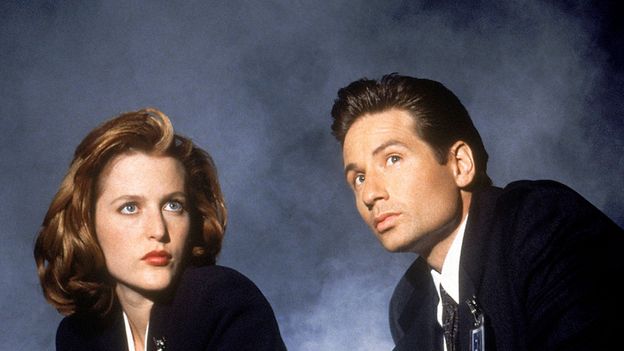
At the same time, television diversified its narrative voice. The X-Files channeled Cold War paranoia and postmodern skepticism, giving rise to fandom culture and internet speculation. ER and The West Wing combined realism with idealism, offering visions of competence and moral clarity amid societal turbulence.
Globally, this was also the moment when American television began shaping the world’s perception of itself. Satellite TV and syndication carried Baywatch, Friends, and Beverly Hills, 90210 into living rooms from Athens to Abu Dhabi.
The 2000s: Reality, Reaction, and the Age of Complexity
The turn of the millennium introduced new anxieties and new forms of storytelling. Reality television exploded with shows like Survivor, American Idol, and The Osbournes, reflecting both fascination and unease with fame, competition, and authenticity. Watching “real” people in extraordinary situations became a cultural obsession, foreshadowing the rise of social media and influencer culture.
Dramatic television, meanwhile, evolved into something cinematic and morally intricate. The Sopranos shattered the mold for what a protagonist could be, turning a mob boss into a tragic antihero. The Wire examined systemic decay in urban America with journalistic precision, while Lost offered a mysterious, serialized puzzle that demanded fan engagement in unprecedented ways. This era has often been called television’s “Second Golden Age” for its narrative ambition and psychological depth.
Audiences no longer expected comfort from television—they wanted complexity, even discomfort. Post-9/11 culture, with its questions about morality, surveillance, and identity, found its reflection in 24 and Battlestar Galactica. Television had matured into an art form that could rival film not only in production value but also in intellectual impact.
The 2010s: Streaming, Diversity, and the Fragmentation of Culture
As the streaming revolution began, television’s center of gravity shifted. Platforms like Netflix, Hulu, and Amazon shattered the old broadcast model, giving viewers control over what, when, and how they watched. Binge-watching replaced appointment viewing, and niche audiences found shows that spoke directly to their experiences.
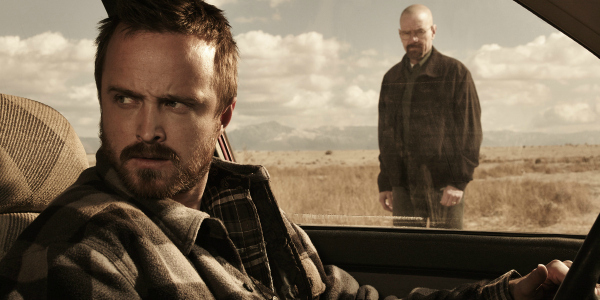
Series such as Breaking Bad, Mad Men, and Game of Thrones epitomized this new landscape. Each drew audiences with cinematic grandeur and morally ambiguous storytelling. Walter White’s descent into villainy, Don Draper’s existential disillusionment, and the brutal politics of Westeros all reflected a world more uncertain and self-aware than ever before.
The 2020s and Beyond: Fragmented Screens, Shared Stories
In today’s digital sprawl, television is no longer confined to the TV itself. Social media, streaming algorithms, and short-form platforms have redefined how audiences engage with stories. Yet, despite fragmentation, the power of a collective moment endures. Shows like Squid Game and The Last of Us prove that even in an age of infinite choice, a truly resonant narrative can still capture the world’s attention overnight.
Television has also become increasingly introspective. Series such as BoJack Horseman and Euphoria dissect mental health and identity with a candor once unthinkable for mainstream media. Audiences no longer want to escape reality—they want to understand it, confront it, or at least find solace in shared vulnerability.
How Television Shapes—and Reflects—Us
What makes television uniquely potent as a cultural mirror is its intimacy. It lives in our homes, our bedrooms, and now in our hands. It evolves alongside us, chronicling our shifting values—from rigid conformity to individualism, from optimism to irony, from moral clarity to complexity. Each era’s defining show not only entertains but instructs; it tells us who we think we are and who we aspire to be.
Television also has a remarkable capacity for empathy. By inviting viewers to live inside other people’s stories—whether they’re aliens on a starship, mobsters in New Jersey, or teenagers in turmoil—it blurs the boundaries between the familiar and the foreign. In doing so, it helps societies negotiate change, challenge assumptions, and imagine alternatives.
Ultimately, the shows that define eras are not merely products of their time; they are agents of transformation. All in the Family made audiences confront prejudice; The Sopranos made them question morality; Game of Thrones made them accept chaos as part of storytelling—and perhaps, life itself.

The Ongoing Story
Television, like culture, never stops evolving. As technology changes and new voices emerge, the stories we tell and the way we tell them will continue to shift. Yet one truth remains: every great show captures more than characters and plotlines—it captures the pulse of its moment.
From the tidy living rooms of the 1950s to the infinite scroll of the streaming era, television has remained our most democratic art form, where laughter, outrage, and reflection coexist. It is both a window and a mirror, showing us the world as it is—and as we might hope it to be.
About the Author
