

Cinema has never been a static art form. From the earliest flickering silent reels to today’s immersive digital spectacles, filmmaking has continuously evolved in tandem with technological advances and shifts in artistic perspective. What makes cinema particularly unique is its ability to both reflect and shape the cultural moment in which it exists. The techniques used behind the camera often influence how audiences experience emotion, time, and truth. In today’s rapidly transforming media landscape, filmmakers are no longer confined to traditional forms. New methods and approaches are redefining what it means to tell a visual story.
We are witnessing an era where the frame itself—the core visual boundary that has long defined cinema—is being actively questioned, reshaped, and at times dismantled. This process, far from being chaotic, is giving rise to bold new aesthetic and narrative possibilities that could only have been dreamed of decades ago. As tools become more accessible and audiences more visually literate, the very notion of what cinema is—and what it can be—is expanding. The traditional grammar of film is being rewritten by directors, cinematographers, and artists who are unafraid to challenge the boundaries of storytelling.
Virtual Production and the End of Location Limits

Among the most transformative innovations in recent years is virtual production, which blends live-action footage with computer-generated environments in real-time using LED volumes and game-engine technology. This technique, perhaps most famously utilized in Disney’s “The Mandalorian,” allows filmmakers to shoot complex, otherworldly scenes without ever leaving the studio. Gone are the days of building elaborate physical sets or traveling across continents for a few seconds of footage. With tools like Unreal Engine, directors now have dynamic environments that react to camera movement and lighting in real time, creating seamless interactions between actors and digital worlds.
This method is more than just a cost-cutting innovation. It marks a profound shift in how filmmakers approach location, lighting, and spontaneity. By giving filmmakers full control over their virtual backdrops during production rather than in post, virtual production restores creative immediacy to a process that was increasingly burdened by heavy visual effects work. The result is a more organic, flexible filmmaking experience, one that empowers storytellers to iterate visually on the spot and integrate performances more authentically with their surroundings.
Drone Cinematography and the Rise of Aerial Expression
While once limited to high-budget productions using helicopters and cranes, aerial shots have become a democratized visual language thanks to the evolution of drone technology. Drones allow for sweeping cinematic views, impossible tracking shots, and dynamic transitions between wide and close perspectives—all captured with relatively lightweight and affordable equipment. The ubiquity of drones in filmmaking has changed how directors conceptualize space and movement within a scene.
But beyond the spectacle, drones are helping filmmakers find intimacy in elevation. Rather than being relegated to establishing shots or flashy overheads, drones are now being used to craft more poetic and emotionally resonant visuals. An aerial view that lingers quietly over a solitary character walking a dirt road can convey isolation and introspection more powerfully than a dialogue scene ever could. What began as a technical novelty is evolving into a sophisticated storytelling tool capable of conveying emotion and tone in ways previously reserved for more traditional camera techniques.
Long Takes and the Art of Immersion
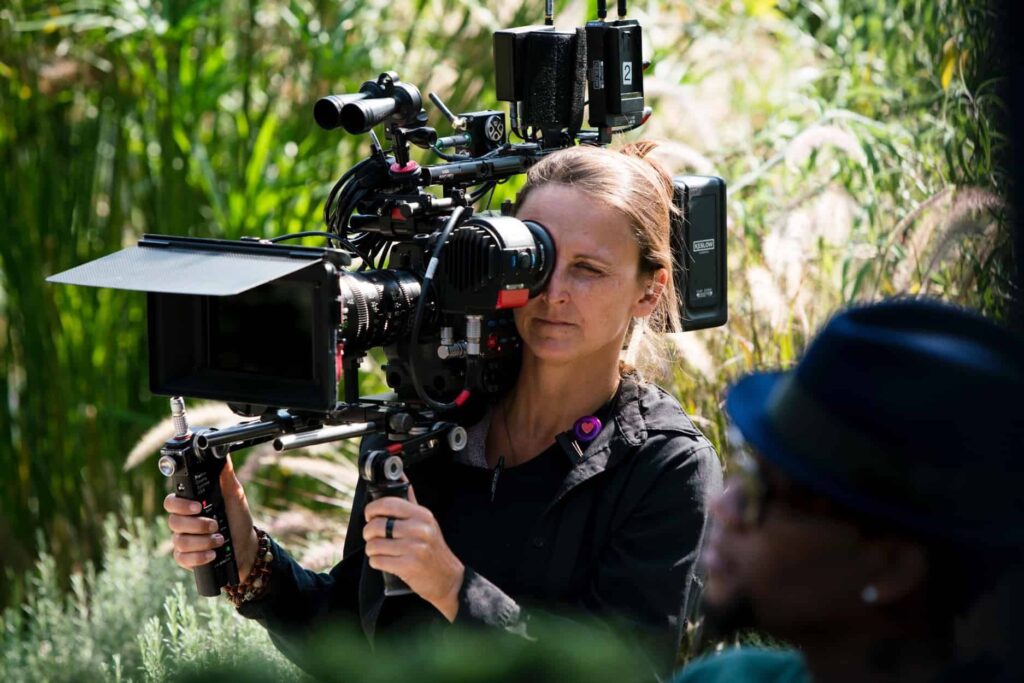
In recent years, there has been a notable resurgence of the long take, a technique where a scene unfolds in one uninterrupted shot. When used well, long takes create an intense sense of realism and immersion, anchoring viewers in the same temporal rhythm as the characters. Whether it’s the harrowing battlefield of “1917” or the dizzying choreography of “Birdman,” long takes are now being used to heighten emotional tension, deepen psychological focus, and challenge the audience’s perception of time.
What’s striking about the modern use of long takes is how they are often enabled by invisible digital stitching, seamlessly blending separate shots into what appears to be one continuous movement. The technique blends the best of both worlds: the emotional intensity of a real-time performance and the control of careful editing. The viewer may not even consciously register that the scene is a single take, but their body and brain respond to the unbroken flow of action. The effect is visceral—less like watching a movie and more like living inside one.
Handheld Realism and the Rise of Raw Aesthetic
Handheld cinematography has long been associated with documentary filmmaking, but it has found new life in narrative film as a tool for emotional immediacy and psychological realism. By abandoning tripods and steadycams, filmmakers are choosing a more unfiltered visual experience, one that mimics the erratic, often unstable viewpoint of human perception. In doing so, they bring the viewer closer to the characters’ physical and emotional state.
Recent films have employed this technique not simply to convey chaos or energy but to forge intimacy. In Greta Gerwig’s “Lady Bird,” the slight shake of the camera underscores the awkwardness and volatility of adolescence. In the Safdie Brothers’ “Uncut Gems,” it builds a nerve-shredding atmosphere that feels both personal and claustrophobic. The handheld camera doesn’t just follow the action—it becomes a character, expressing unease, vulnerability, and urgency.
Non-Linear Editing and the Fragmented Self

Editing is where much of a film’s meaning is ultimately constructed, and today’s filmmakers are increasingly abandoning chronological storytelling in favor of non-linear structures. This method reflects the reality of memory, trauma, and psychological fragmentation in a way linear storytelling often cannot. By disrupting traditional time flow, directors are encouraging audiences to actively piece together narratives, fostering a more interactive form of engagement.
Christopher Nolan has famously experimented with non-linear editing in films like “Memento” and “Dunkirk,” but many independent filmmakers are now exploring non-linearity as a mode of truth rather than twist. The disjointed timelines in “Moonlight” or “I’m Thinking of Ending Things” are not gimmicks but narrative tools that mirror the complexity of human identity and perception. This approach reveals that story is not merely a sequence of events—it’s a mosaic of emotions, revelations, and contradictions.
Aspect Ratios and Visual Storytelling
One of the more subtle yet impactful innovations in contemporary cinema is the creative use of aspect ratios. Once seen as a fixed technical decision, aspect ratio is now wielded as an expressive device. Directors are switching between formats within the same film to convey shifts in perspective, emotion, or timeline. In “The Grand Budapest Hotel,” Wes Anderson uses varying aspect ratios to delineate historical periods. In “First Reformed,” the tight 4:3 box constrains the viewer’s vision, reflecting the protagonist’s moral suffocation.
The choice of ratio becomes a storytelling tool rather than a backdrop. It shapes how much of the world we can see, what is emphasized or obscured, and how the viewer physically feels watching the film. As streaming platforms and digital projection make multiple formats easier to implement, expect aspect ratios to become even more central to visual storytelling in the coming years.
AI, Machine Learning, and the Future of Film Creation
Perhaps the most controversial and disruptive development in filmmaking is the rise of AI and machine learning technologies in pre- and post-production. From script generation to visual effects and even acting replication, AI is changing the landscape in ways that are both thrilling and deeply unsettling. On one hand, these tools can streamline labor-intensive processes and democratize access to high-end production techniques. On the other, they challenge longstanding definitions of creativity, authorship, and authenticity.
Filmmakers are beginning to experiment with generative visuals and AI-assisted editing to create aesthetic experiences that would have been impossible even five years ago. The question no longer revolves solely around what cameras can capture, but what computers can imagine. Whether this becomes a tool for expanding artistic vision or a shortcut for soulless mass content remains to be seen. What’s clear is that AI is already influencing how stories are told, shaped, and delivered—and its role will only grow.
A Cinematic Renaissance of Technique
What unites all these innovations is not just their technical ingenuity, but their ability to reinvigorate storytelling. Filmmaking has always thrived at the intersection of art and technology. Today, that intersection is more fertile—and more dynamic—than ever before. Directors are no longer restricted by the physical constraints of camera rigs, the cost of exotic locations, or the linear limitations of the human editor. Instead, they are being offered a palette that is vast, fluid, and highly personalized.
The result is a cinematic language that is more flexible, more intimate, and more immersive. From the silent revolution of drones to the philosophical puzzles of non-linear editing, every technique contributes to an evolving conversation about how we see, feel, and understand through images. Breaking the frame doesn’t mean abandoning structure—it means rethinking it. In doing so, filmmakers are not only reshaping the future of cinema, but also redefining how we experience human stories.
About the Author
