
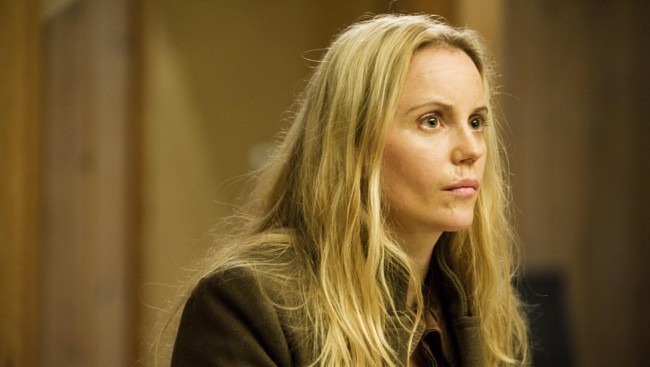
The Birth of a New Kind of Detective
When the Scandinavian television series Bron/Broen (The Bridge) premiered in 2011, it introduced audiences to one of the most distinctive detectives in modern crime drama: Saga Norén, the enigmatic and unflinchingly honest investigator from the Malmö County Police. Played by Sofia Helin, Saga quickly became a cultural phenomenon—her peculiar mannerisms, blunt communication, and uncompromising dedication to justice set her apart from the archetypal detectives that had dominated screens for decades.
At first glance, Saga might seem like a familiar type within the Nordic noir tradition: a brooding, socially isolated investigator navigating the dark underbelly of Scandinavian society. But the writers and Helin’s portrayal went far beyond stereotype. Saga was not just a detective with a tragic past; she was an entirely new kind of protagonist—one whose worldview, logic, and social interactions defied the expectations of traditional storytelling. Her presence fundamentally changed how audiences perceived both crime fiction and the representation of neurodiversity on screen.
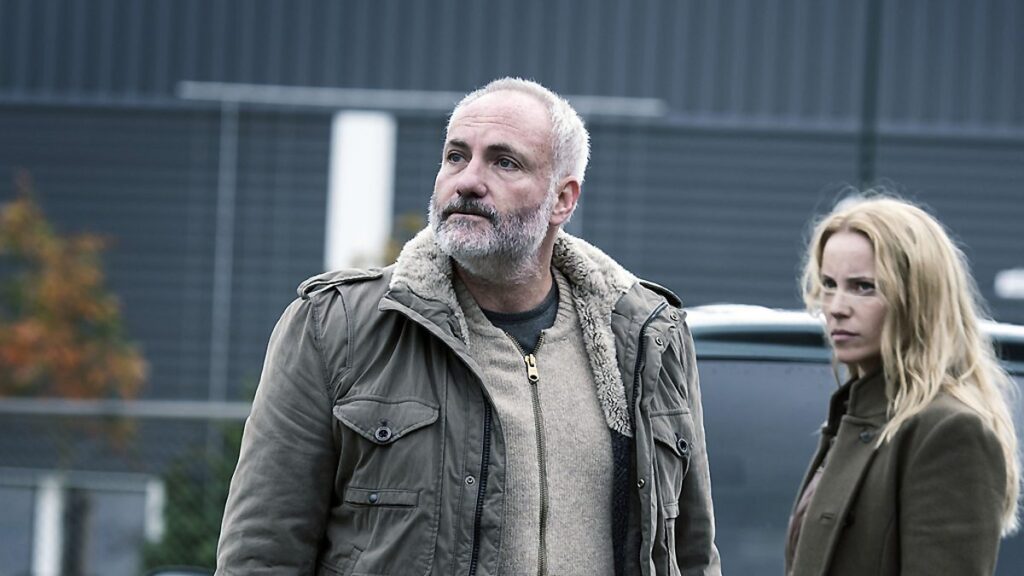
The World of Bron/Broen
Bron/Broen begins with a body found precisely on the Øresund Bridge, which connects Sweden and Denmark. The crime scene lies directly on the border, forcing Swedish and Danish authorities to cooperate. From this premise, the show explores cultural differences, political tensions, and moral ambiguity, with Saga Norén from Malmö working alongside Martin Rohde from Copenhagen.
This cross-border setting became a metaphorical bridge as much as a literal one. The series examined the space between two nations, two moral codes, and, most poignantly, two minds. Saga and Martin embodied these differences—she, guided by rules, facts, and forensic precision; he, shaped by empathy, intuition, and emotional intelligence. Their partnership drove not only the procedural elements of the show but also its emotional core.
Saga Norén: A Study in Contradictions
Saga Norén is a study in contrasts. She is brilliant yet socially awkward, fearless yet vulnerable, rule-bound yet deeply moral in her own unique way. Her character operates at the intersection of genius and isolation—a mind that processes information with extraordinary clarity but struggles to navigate the emotional subtext that most people take for granted.
Sofia Helin’s performance balances these contradictions with remarkable subtlety. Her portrayal avoids caricature; instead of exaggerating Saga’s quirks, Helin grounds them in authenticity. Saga’s directness is never used for comic relief, nor is her emotional distance presented as a flaw to be fixed. Instead, these qualities are portrayed as integral parts of who she is—a woman functioning in a world that often misunderstands her.
Beyond the Diagnosis: The Ethics of Portrayal
Saga Norén’s impact extends beyond her role as a detective. She became a symbol of representation for viewers who recognized aspects of themselves in her social struggles, precision, and literal-mindedness. Yet the creators of Bron/Broen handled this aspect with rare sensitivity.
Unlike many television portrayals of neurodiverse characters, Saga’s traits are not framed as obstacles to overcome or quirks to be explained. The show never invites pity for her; it instead challenges the audience to adapt to her way of seeing the world. In doing so, it reverses the usual dynamic of audience empathy. We do not watch Saga trying to fit into society—we watch society trying, often failing, to understand her.
Her sense of morality is also unconventional. For Saga, right and wrong are matters of principle, not emotion. This can make her appear cold or detached, but it also underscores her integrity. She cannot lie, manipulate, or compromise the law—even when doing so would make her life easier. This inflexible honesty isolates her from colleagues but also defines her heroism.
A New Archetype in Crime Fiction
Before Saga Norén, the archetype of the crime detective was dominated by figures such as Sherlock Holmes, Hercule Poirot, Sarah Lund (The Killing), and Kurt Wallander. Each of these characters possessed traits of obsession, intellect, and alienation, but Saga marked a turning point.
Unlike her predecessors, she did not mask her difference behind irony or detachment. She was unapologetically herself. Where Holmes’s eccentricity is often charming or comedic, Saga’s social bluntness has real consequences. It leads to professional friction, failed relationships, and painful misunderstandings. Yet she never seeks to change herself to appease others.
In this way, Saga represents a new kind of female detective—one who is not sexualized, emotionalized, or softened for audience comfort. Her strength lies in her precision and her refusal to conform to expectations of femininity or empathy. This redefinition of the female investigator has influenced later television portrayals, from Lisbeth Salander in The Girl with the Dragon Tattoo to Carrie Mathison in Homeland, though Saga remains in a class of her own.
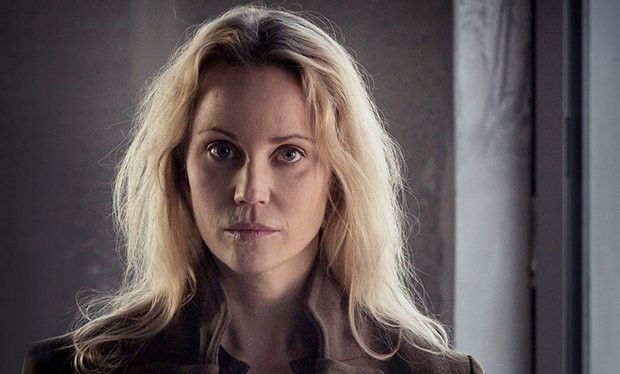
The Cost of Dedication
One of the most powerful aspects of Bron/Broen is its exploration of the personal cost of Saga’s devotion to her work. Her life outside the police station is almost nonexistent. She lives alone in a minimalist apartment, drives her iconic green Porsche 911, and rarely engages in activities unrelated to her cases. Her relationships, when they occur, are awkward, fleeting, or tragic.
This isolation is not romanticized. The series does not portray Saga as a noble martyr but as someone deeply affected by her inability to connect. We see glimpses of her pain—her childhood trauma, her difficult family history, and her longing for human connection even as she struggles to express it.
In these moments, Bron/Broen transcends the boundaries of a police procedural and becomes a profound psychological portrait. Saga’s brilliance is both her weapon and her prison. Her loyalty to the law and to truth isolates her, yet it is also what allows her to pursue justice in a world rife with moral compromise.
The Bridge as Metaphor
The Øresund Bridge is more than a setting—it is the central metaphor of the series and of Saga herself. It connects two nations, two languages, and two ways of thinking. It also symbolizes the space Saga occupies between worlds: between reason and emotion, isolation and belonging, Sweden and Denmark, logic and humanity.
Throughout the series, Saga’s ability to “bridge” these divides evolves. Her partnership with Martin Rohde, in particular, humanizes her in subtle ways. Martin’s warmth and emotional intelligence serve as a counterpoint to Saga’s rigidity. Their friendship, built on mutual respect and shared trauma, becomes one of the most compelling dynamics in modern television.
A Cultural Phenomenon
Saga Norén’s popularity reached far beyond Scandinavia. The series was broadcast in over 170 countries and inspired multiple remakes, including The Tunnel (UK/France) and The Bridge (US/Mexico). Yet none of these adaptations captured the unique balance of melancholy, realism, and humanity that defined the original.
In Sweden and Denmark, Saga became a household name. Her distinctive greeting—“Saga Norén, Länskrim Malmö”—became instantly recognizable, symbolizing both professionalism and an almost ritualistic sense of identity. She also influenced popular culture in unexpected ways: fashion inspired by her leather trousers and jackets, academic papers analyzing her neurodiversity, and even training seminars using her as a model for investigative persistence.
Her impact on global television is equally significant. Saga redefined what audiences expected from female leads in crime dramas. She proved that emotional vulnerability and logical precision could coexist, that strength could manifest in truthfulness rather than dominance, and that storytelling could respect difference without reducing it to a plot device.
Sofia Helin’s Mastery
Much of Saga’s resonance stems from Sofia Helin’s extraordinary performance. She created a character of remarkable consistency and depth, shaping every aspect—from body language to tone of voice—with intention. Saga’s upright posture, controlled gestures, and precise diction convey both her discipline and her discomfort with social norms.
Helin’s ability to convey emotion beneath a seemingly impassive surface gives Saga her humanity. A flicker of confusion, a delayed reaction, a brief tremor in her voice—these moments reveal the turbulence beneath her composure.
Legacy and Influence
Even years after Bron/Broen concluded, Saga Norén remains one of the most influential figures in contemporary television. Her legacy extends across genres and cultures, inspiring creators to craft more complex, authentic portrayals of women and neurodiverse individuals in media.
She also helped solidify the global appeal of Nordic noir. The show’s blend of moral complexity, psychological realism, and minimalist style became a blueprint for many later series. Yet none have matched Bron/Broen’s balance of intellect and emotion, largely because none have created a protagonist quite like Saga.

Conclusion: The Enduring Power of Saga Norén
Saga Norén, Länskrim Malmö, is more than just a detective—she is a mirror held up to society, reflecting both its hypocrisies and its hopes. Through her, Bron/Broen explored not only the mechanics of crime and justice but the fragile connections that define human existence.
Her story reminds us that difference is not deficiency, that truth is often uncomfortable, and that empathy can emerge even in the most unlikely hearts. Saga’s green Porsche may now rest silent, her cases closed, but her legacy endures—in every detective who dares to be different, in every story that values integrity over acceptance, and in every viewer who learned, through her, that there are many ways to be human.
About the Author
